I am Weihan Li (黎维瀚), a PhD student at Georgia Tech CSE, advised by Prof. Anqi Wu. Previously, I was an undergraduate at Zhejiang University, working with Prof. Gang Pan. My CV is available here.
Research
I work on robot learning for dexterous manipulation: teaching multi-fingered robot hands to perform bimanual manipulation skills learned from human demonstrations, in simulation and on real hardware. I have built the full pipeline, from human motion capture through retargeting to reinforcement-learning training in simulation, and run it on different dexterous robot hands. Videos are on the Robot Demos page.
Before moving to robotics, I worked on modeling communication across multiple brain regions and on analyzing animal behavior from pose and video.
Current Dexterous Manipulation Bimanual Robot Skills Learning from Human Demonstrations Sim-to-Real Transfer
Previously Multi-Region Brain Communication Animal Behavior Analysis
Publications
See also my Google Scholar profile.
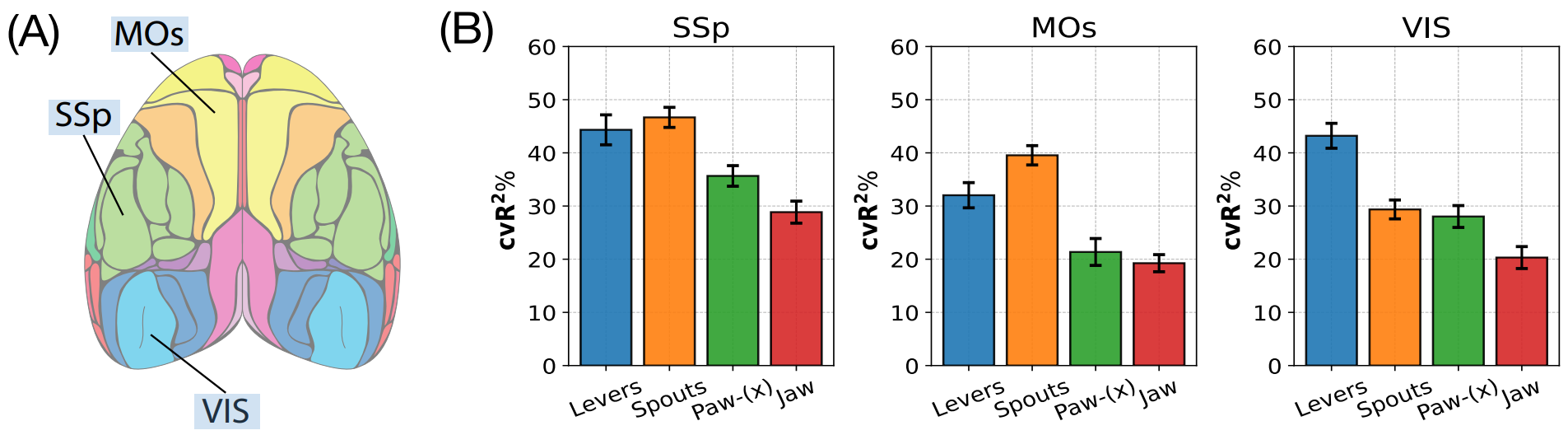
Learning When Visual Context Matters for Mouse Behavior Analysis
Weihan Li, Jingyang Ke, Qinheng Pu, Yule Wang, Chengrui Li, Anqi Wu
NeurIPS 2026
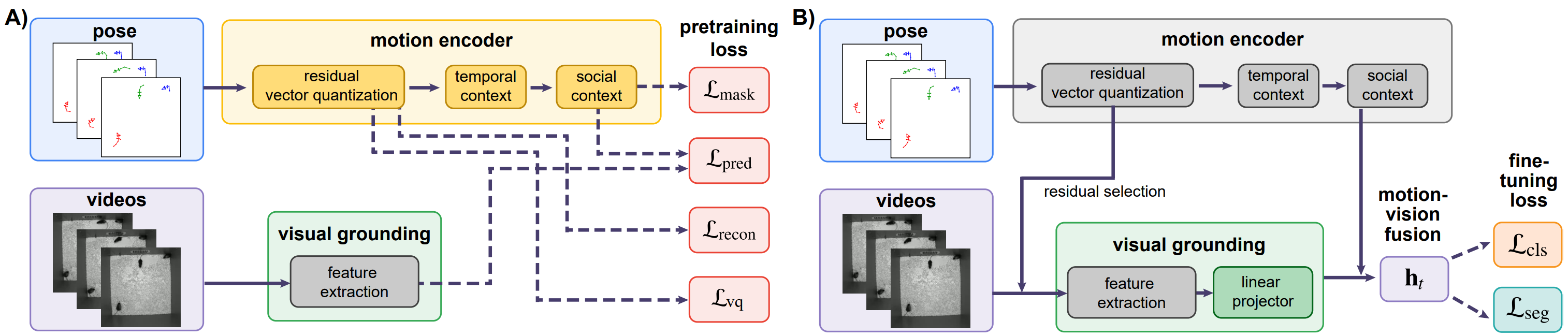
Frames with large quantization residuals in a pose-based motion encoder are where visual context helps most; ResiFuse adds video features only on those frames and outperforms pose- and video-based baselines on most tasks across three mouse behavior datasets.
MICE: Multi-animal Interaction Context Encoder — A Hierarchical Foundation Model for Mouse Behavior
Yen-Shuo Su, Weihan Li, Anqi Wu
NeurIPS 2026Spotlight
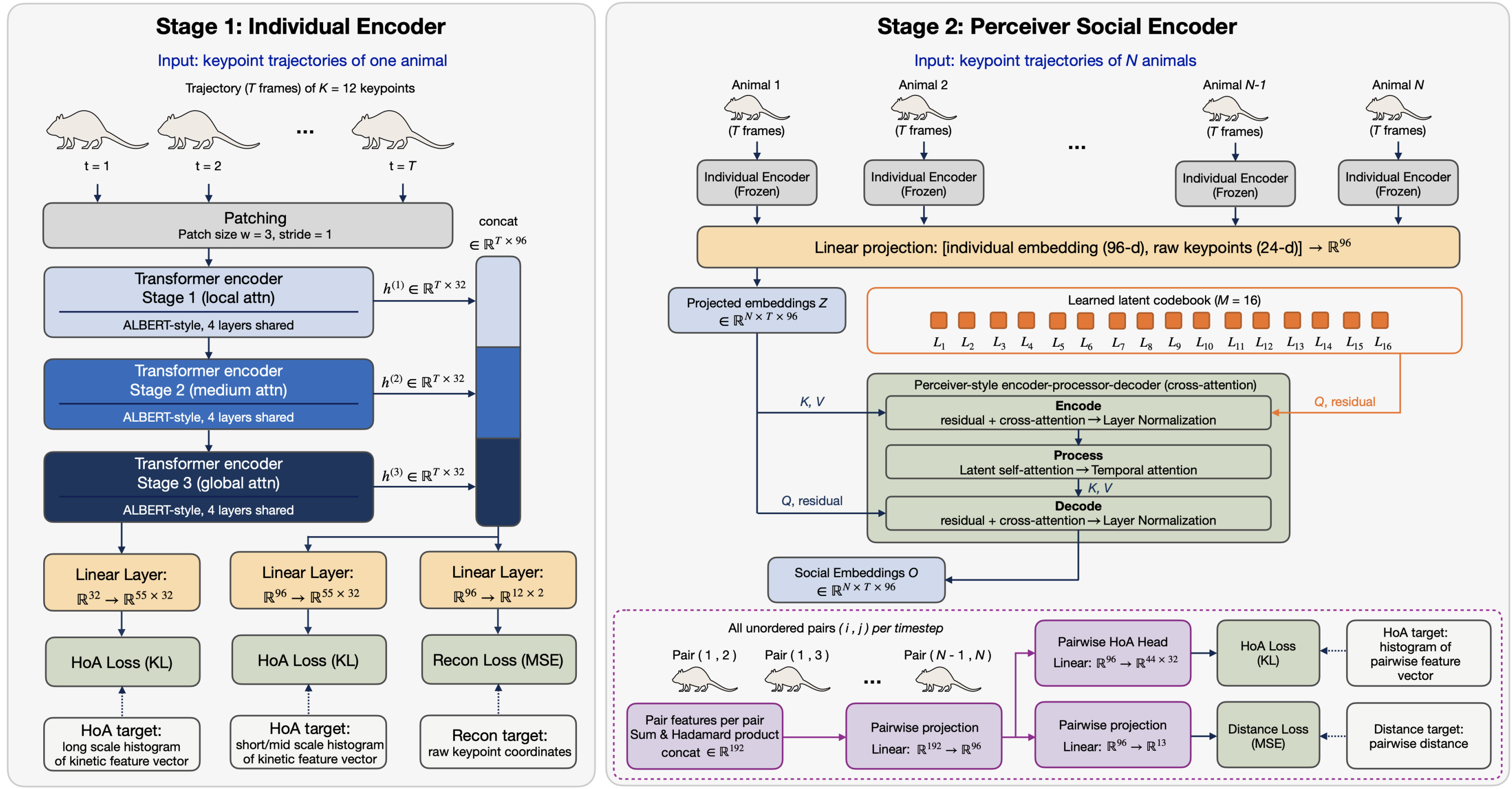
A hierarchical self-supervised foundation model for mouse behavior, pretrained jointly on six mouse-pose datasets with one to four animals; a Perceiver-style social encoder lets a single checkpoint handle any group size, matching or exceeding prior keypoint-based baselines.
QDMouse4M: A Multi-View 3D Mouse Spontaneous Behavior Dataset with Quantum-Dot Markers
Jingyang Ke, Amartya Pradhan, Xueling Zhang, Weihan Li, Anqi Wu, Jeffrey E. Markowitz
NeurIPS 2026 · Evaluations and Datasets Track
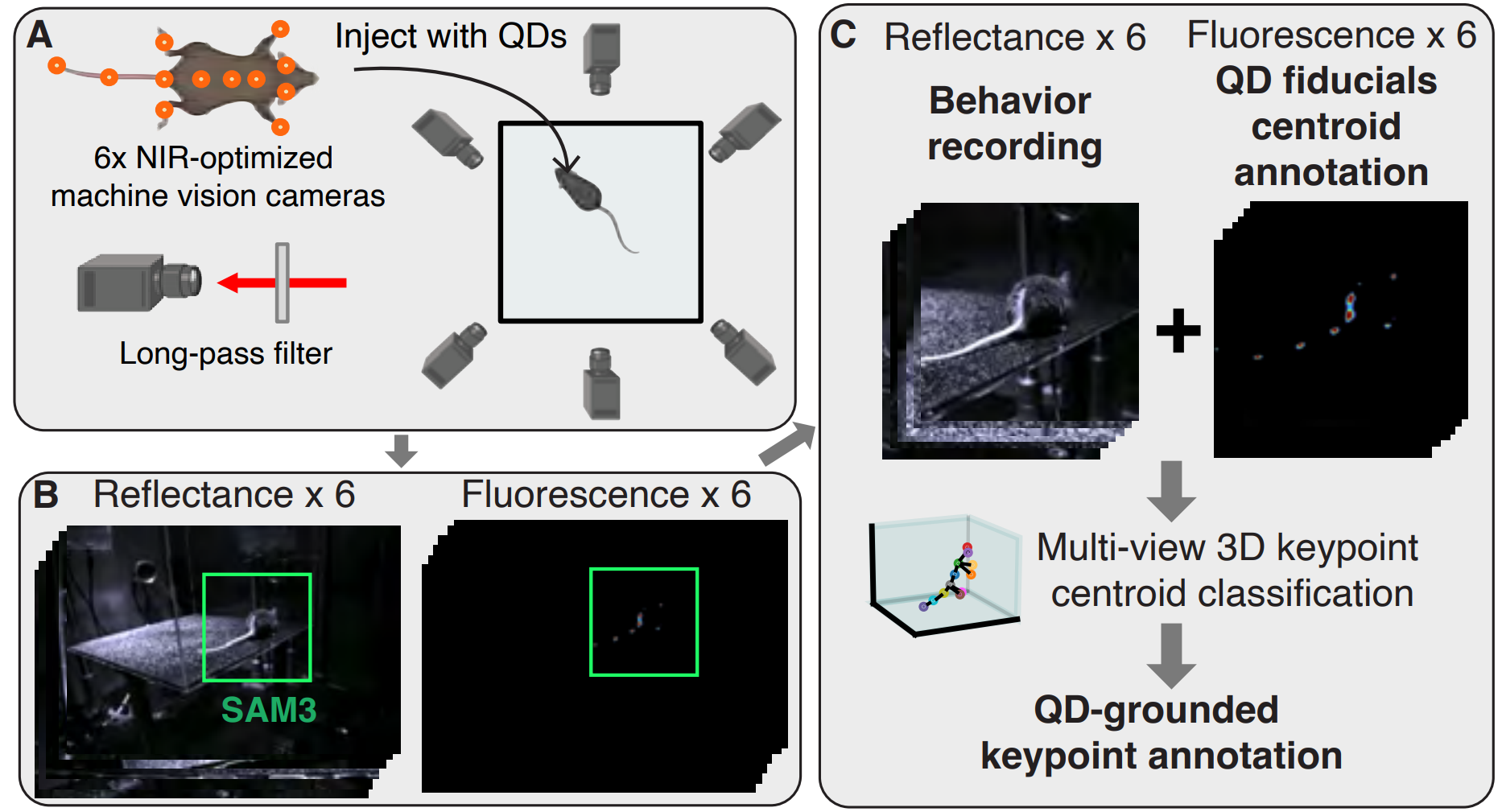
A six-view dataset of freely moving mice with over four million frames, whose 2D and 3D keypoint labels come from subdermal quantum-dot fluorescence markers; used to benchmark markerless 2D/3D pose estimation and downstream spontaneous-behavior analysis.
BehaviorVLM: Unified Finetuning-Free Behavioral Understanding with Vision-Language Reasoning
Jingyang Ke*, Weihan Li*, Amartya Pradhan, Jeffrey Markowitz, Anqi Wu
Preprint
A unified framework for animal pose estimation and behavioral understanding that guides pretrained vision-language models through explicit, verifiable reasoning steps, with no task-specific finetuning and minimal human labeling.
*Equal contribution
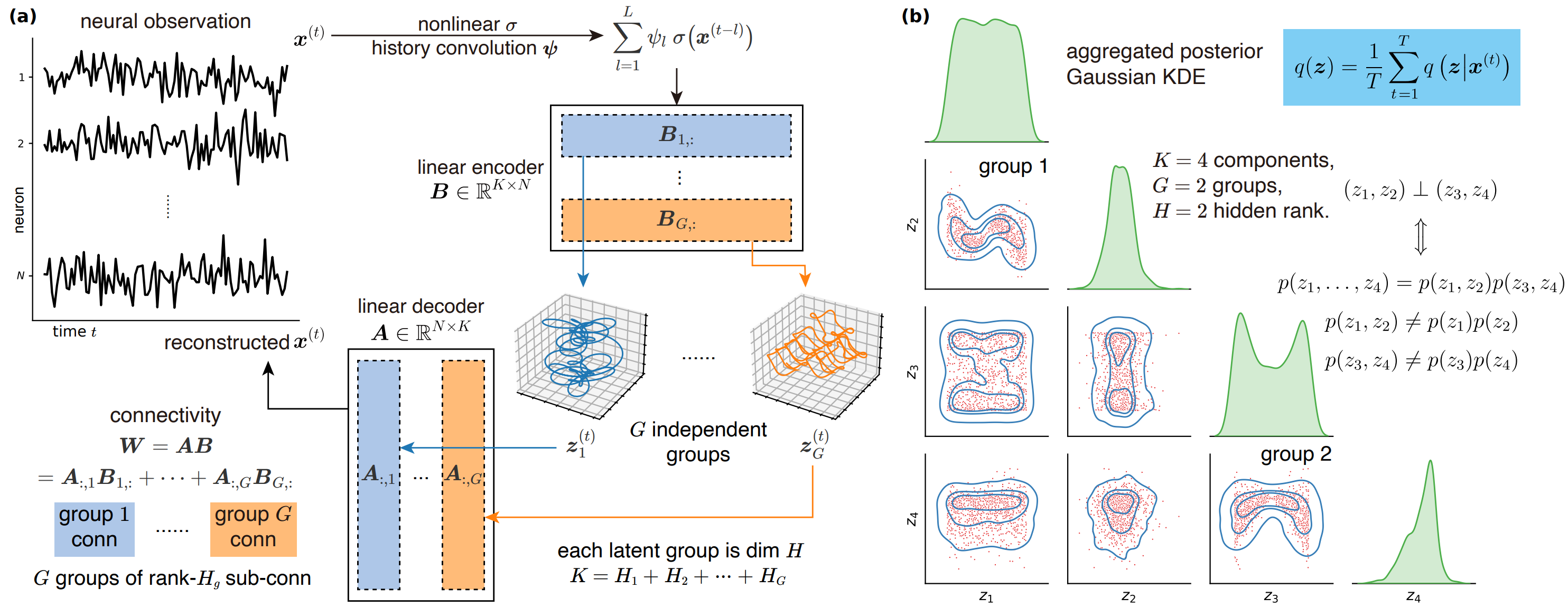
A Factorized Low-Rank RNN Framework for Uncovering Independent Neural Latent Dynamics and Connectivity
Chengrui Li, Yunmiao Wang, Yule Wang, Weihan Li, Dieter Jaeger, Anqi Wu
ICML 2026Spotlight
FacRNN, a generative low-rank RNN framework that encourages group-wise independence among latent dynamics, yielding more disentangled and interpretable latent trajectories and low-rank connectivity.
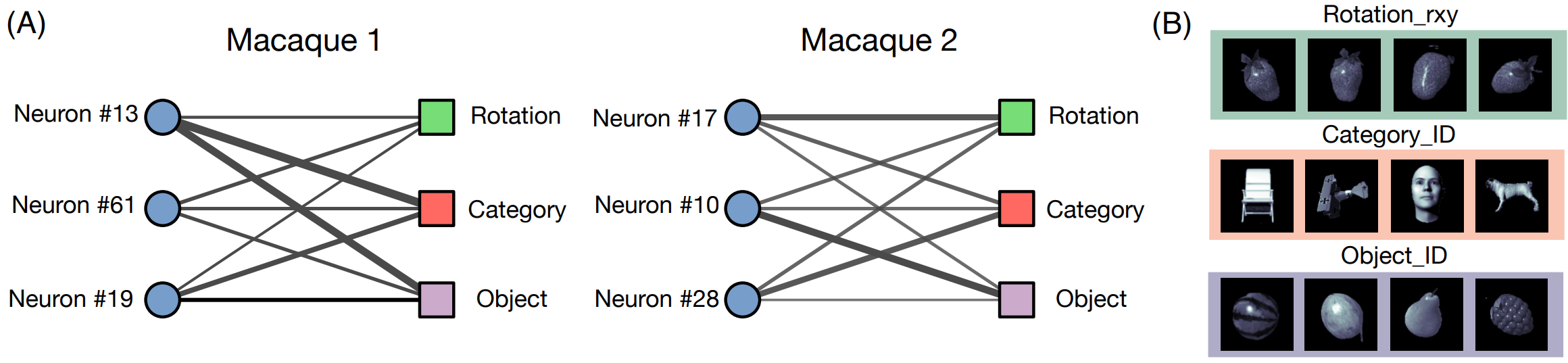
Uncovering Semantic Selectivity of Latent Groups in Higher Visual Cortex with Mutual Information-Guided Diffusion
Yule Wang, Joseph Yu, Chengrui Li, Weihan Li, Anqi Wu
ICLR 2026
MIG-Vis infers group-wise disentangled neural latent subspaces from macaque IT cortex and uses mutual-information-guided diffusion to visualize the visual-semantic features each latent group encodes.
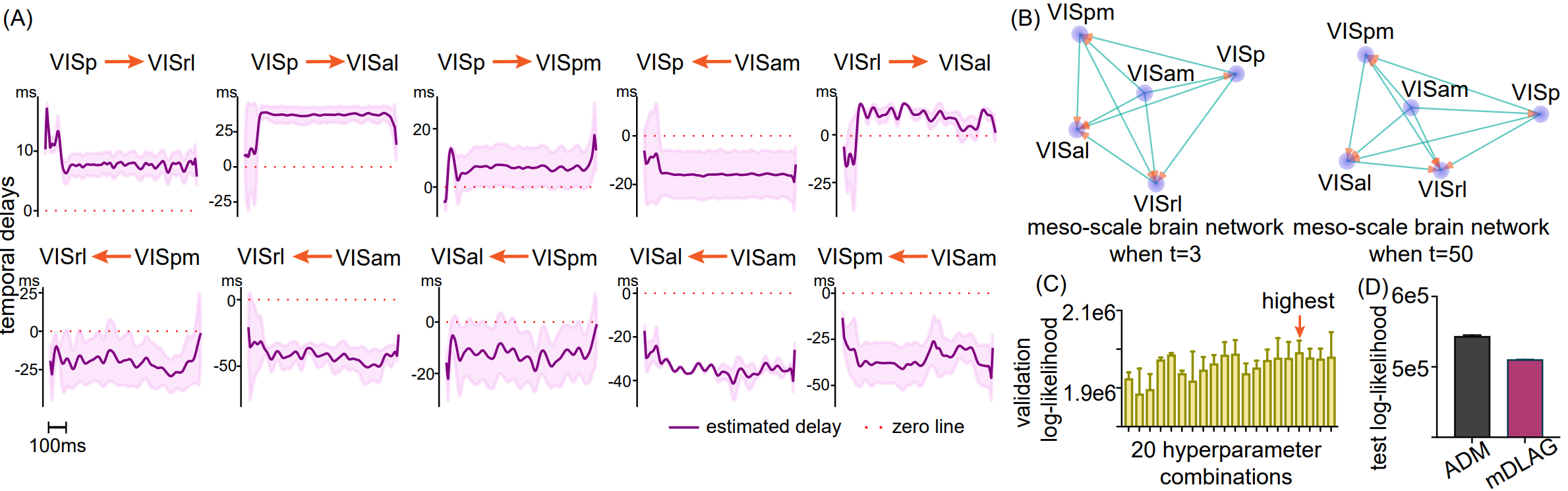
Learning Time-Varying Multi-Region Brain Communications via Scalable Markovian Gaussian Processes
Weihan Li, Yule Wang, Chengrui Li, Anqi Wu
ICML 2025Oral
The Adaptive Delay Model combines Gaussian processes with state-space models to learn multi-region brain communication with time-varying delays, using parallel-scan inference to scale to long recordings.
Exploring Behavior-Relevant and Disentangled Neural Dynamics with Generative Diffusion Models
Yule Wang, Chengrui Li, Weihan Li, Anqi Wu
NeurIPS 2024
BeNeDiff identifies behavior-relevant, disentangled neural subspaces and uses video diffusion models to generate behavior videos that reveal what each neural factor encodes.
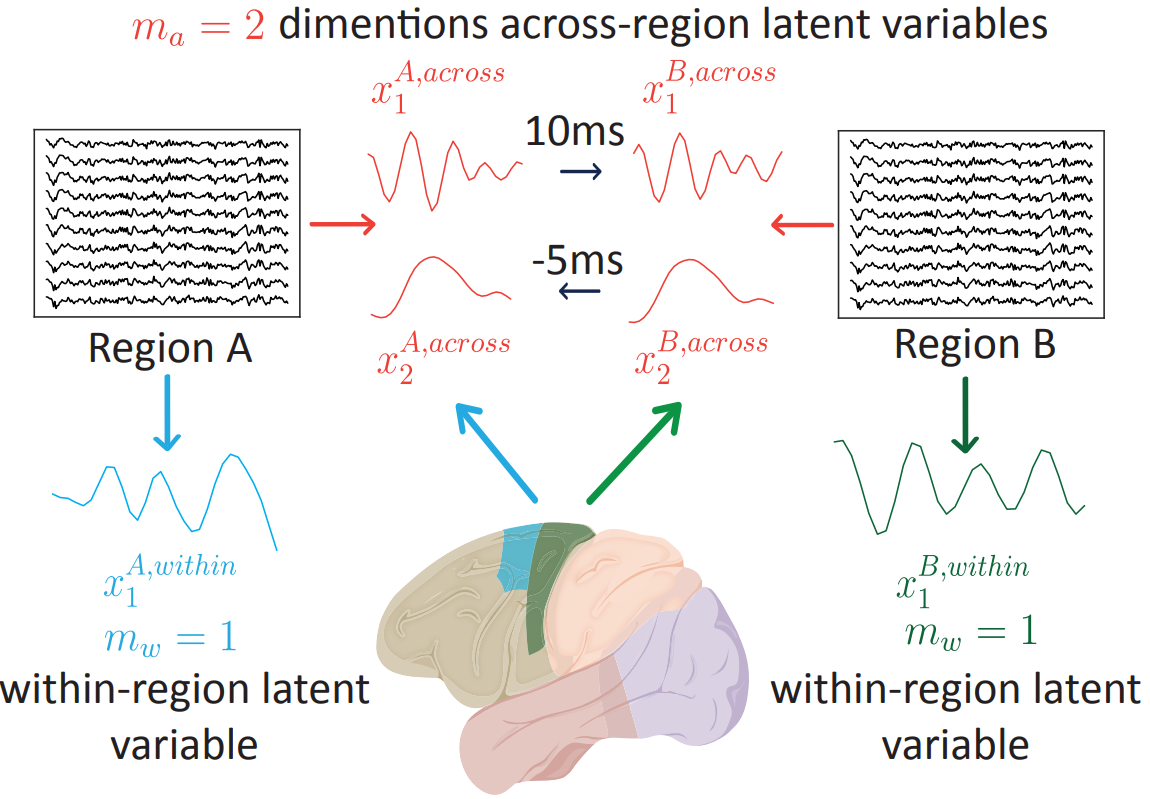
Multi-Region Markovian Gaussian Process: An Efficient Method to Discover Directional Communications Across Multiple Brain Regions
Weihan Li, Chengrui Li, Yule Wang, Anqi Wu
ICML 2024
Builds a linear dynamical system that mirrors a multi-output Gaussian process with explicit frequencies and phase delays, revealing communication directions across brain regions and separating oscillatory communication into frequency bands at linear cost.
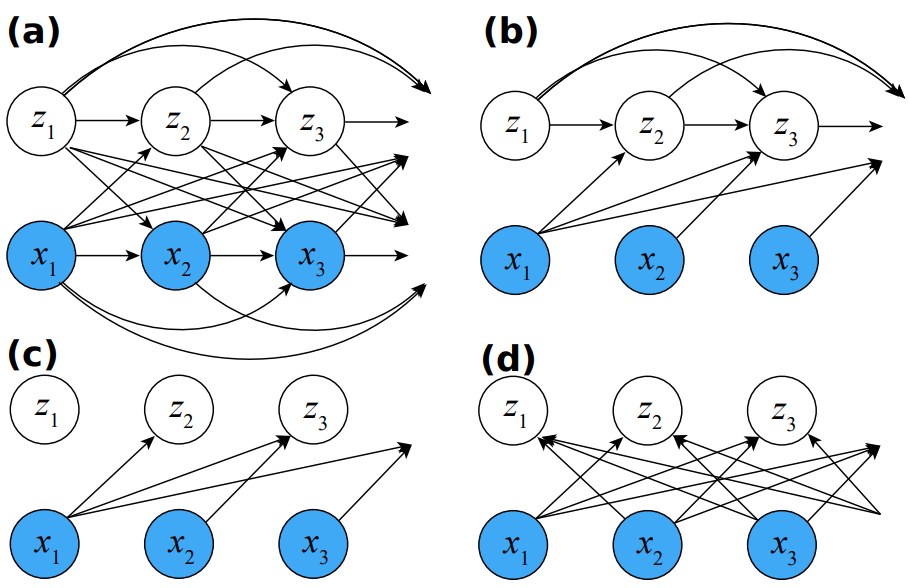
A Differentiable Partially Observable Generalized Linear Model with Forward-Backward Message Passing
Chengrui Li, Weihan Li, Yule Wang, Anqi Wu
ICML 2024
A differentiable partially observable GLM that enables pathwise gradients, paired with a forward–backward message-passing variational model, for learning neural connectivity in the presence of hidden neurons.
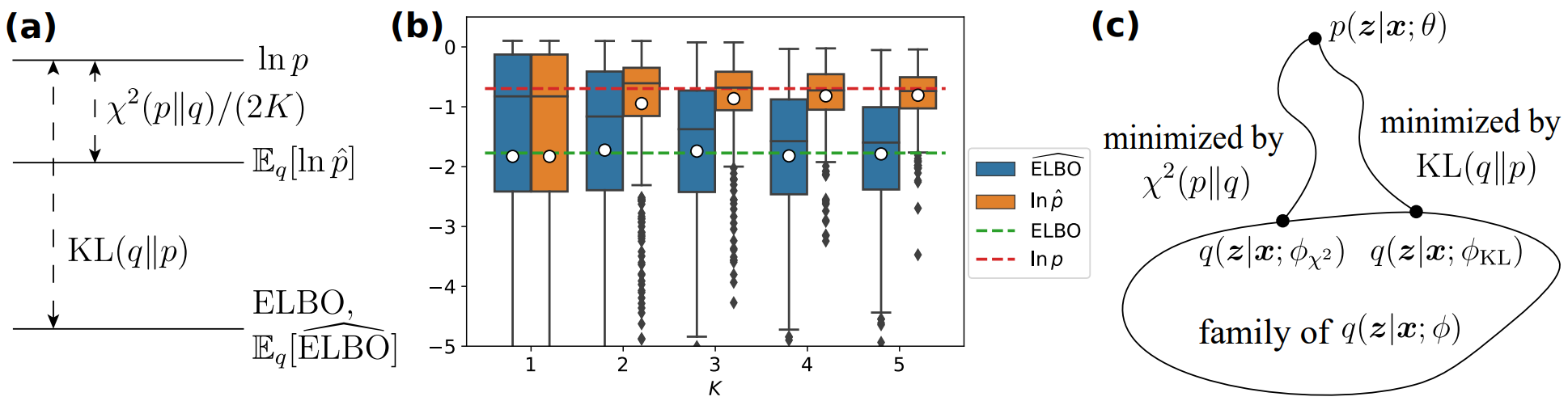
Forward χ2 Divergence Based Variational Importance Sampling
Chengrui Li, Yule Wang, Weihan Li, Anqi Wu
ICLR 2024Spotlight
Variational importance sampling that directly estimates and maximizes the log-likelihood of latent variable models, using a proposal obtained by minimizing the forward χ2 divergence.
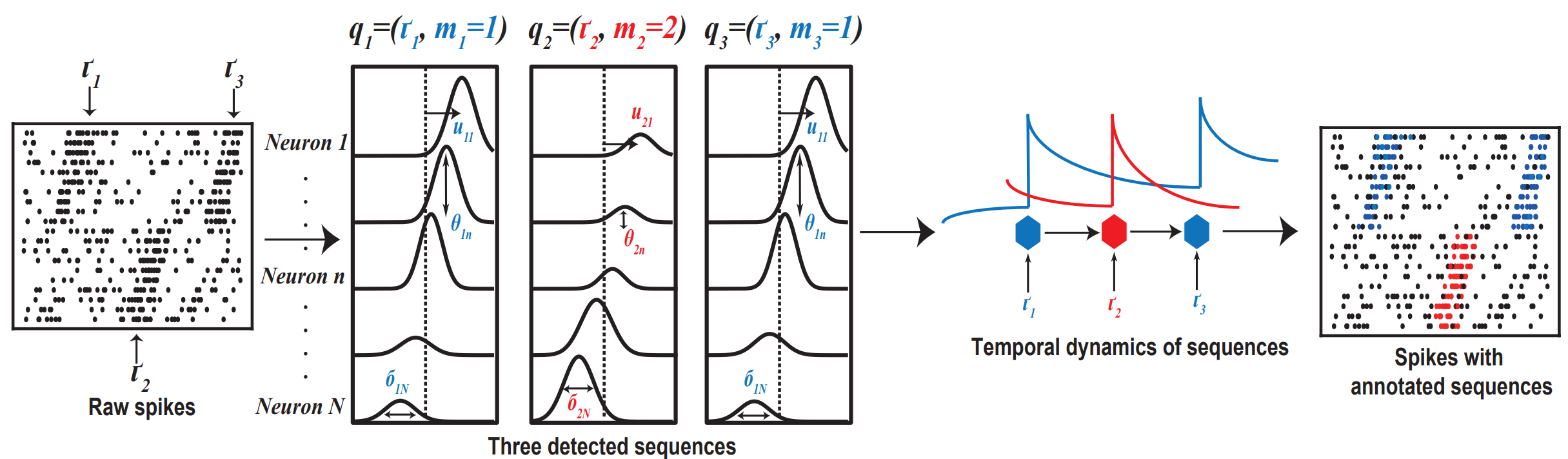
Online Neural Sequence Detection with Hierarchical Dirichlet Point Process
Weihan Li, Yu Qi, Gang Pan
NeurIPS 2022
A hierarchical Dirichlet point process that detects neural sequences online with particle filters and introduces new sequence types on the fly, without specifying their number in advance.
Efficient Point-Process Modeling of Spiking Neurons for Neuroprosthesis
Weihan Li*, Cunle Qian*, Yu Qi, Yiwen Wang, Yueming Wang, Gang Pan
EMBC 2021
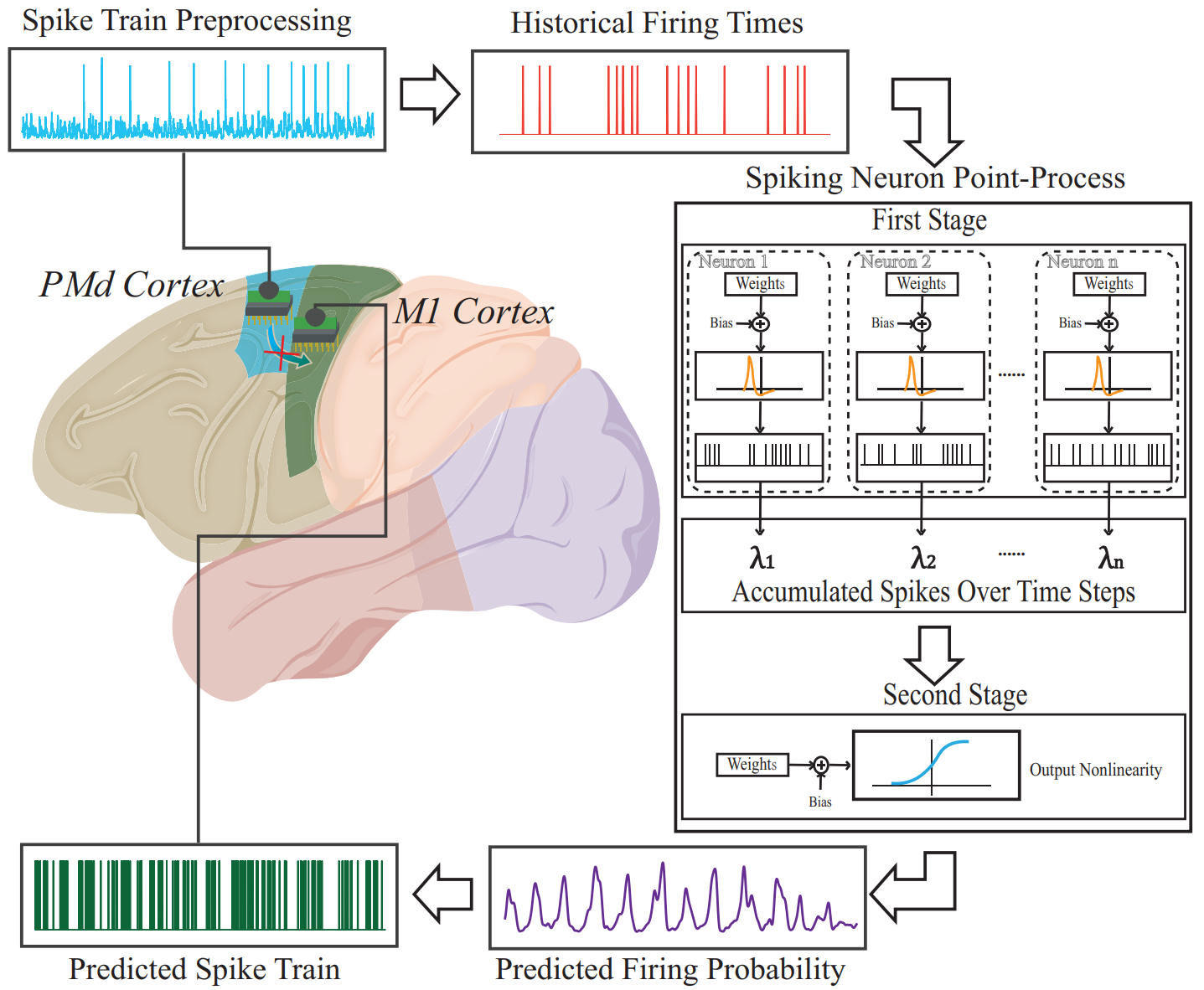
A spiking neuron point-process model that takes spike times as input to model nonlinear spike transformations between cortical areas (PMd to M1), and can run on low-energy neuromorphic hardware for neuroprostheses.
*Equal contribution
Service
Reviewer: NeurIPS, ICML, ICLR